Why New Zealand’s South Island is Better in Winter
By Amy Lucas, Solo Travel Consultant, Two’s a Crowd | twosacrowd.com.au
Most Australians think of New Zealand as a summer destination. Blue skies, hiking tracks, Queenstown in the sunshine. And they’re not wrong — New Zealand in summer is beautiful.
But the South Island in winter is something else entirely. Something that the crowds haven’t discovered yet. Something that photographers and seasoned travellers talk about in hushed, knowing tones. And something that, once you’ve experienced it, makes you wonder why you ever went any other time.
We’re going to make the case for winter. A genuine, evidence-based case. And by the end of it, you might find yourself looking at flights.
The Light
Let’s start with the thing that defines the South Island winter experience more than anything else: the light.
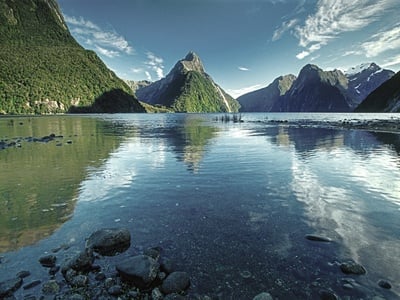
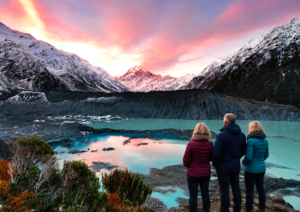
New Zealand winter light is extraordinary. Clear, low-angled, golden — it falls across the landscape with a quality that simply doesn’t exist in summer. Snow-covered peaks glow amber at dawn. The turquoise waters of Lake Tekapo and Lake Wānaka become almost impossibly vivid against grey-white alpine skies. Milford Sound, wrapped in low cloud and winter mist, takes on a drama and atmosphere that the summer photographs — as beautiful as they are — simply don’t capture.
Photographers know this. Landscape painters know this. And the growing number of travellers who have discovered the South Island in winter know it too.
Fewer Crowds — Significantly Fewer
New Zealand welcomed over 3.5 million international visitors in the year before the pandemic, and the numbers are climbing again. In summer, the South Island’s most beloved destinations — Milford Sound, Queenstown, Lake Tekapo, the glaciers — can feel overwhelmed.
In winter, that changes dramatically. The crowds thin. The car parks empty. The walking tracks become yours alone, save for the occasional local walker and a contemplative silence broken only by birdsong.
Milford Sound in winter — with fewer visitors, lower cloud dramatically increasing waterfall volume and height, and the fiord at its most moody and theatrical — is a profoundly different experience from the peak summer version. Many who have visited both say winter is the definitive experience.
Te Anau’s Glowworm Caves are quieter. The TranzAlpine Train runs in greater peace. Arrowtown’s stone-cottage streets, dusted with frost, are more beautiful than any postcard suggests. And Queenstown — always vibrant — takes on a European alpine character in winter that genuinely surprises visitors expecting a summer holiday town.
The Stargazing
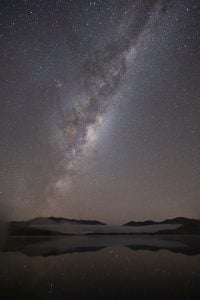
The Mackenzie Basin — the vast, high-altitude plateau surrounding Aoraki / Mount Cook — is one of the finest stargazing locations in the Southern Hemisphere. It is a designated International Dark Sky Reserve, and for good reason.
In summer, the long daylight hours limit the viewing window. In winter, darkness falls early and completely, and on a clear night the Milky Way is overwhelming — a vast, dense river of light arching over the silhouette of New Zealand’s highest peak. The Southern Cross. The Magellanic Clouds. Stars in numbers most Australians, living in light-polluted cities, have never seen.
It is genuinely one of those experiences — standing in the silence of the Mackenzie Basin on a clear July night — that changes how you see the world.
The Wildlife
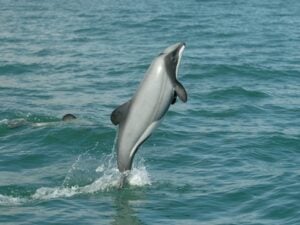
Winter is prime time for some of New Zealand’s most remarkable wildlife encounters.
Akaroa Harbour on Banks Peninsula is home to the Hector’s dolphin — the world’s smallest marine dolphin, found only in New Zealand waters. Fewer than 15,000 exist on the planet. They are most reliably spotted in the sheltered waters of Akaroa Harbour, and winter boat tours operate in peaceful, uncrowded conditions.
The West Coast’s fur seals are resident year-round, hauling out on rocky platforms along the dramatic coastline. And in the bush surrounding the glaciers, native birds — including the cheeky kea, the world’s only alpine parrot — are easier to spot in winter’s bare-branched forests.
The Snow
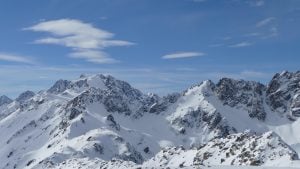
New Zealand’s Southern Alps receive significant snowfall from June through August, and the effect on the landscape is transformational.
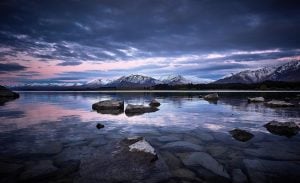
The Remarkables above Queenstown. The Ben Ohau Range above Lake Tekapo. The peaks surrounding the Haast Pass and the approach to Wānaka. In winter these mountains carry heavy snow, their peaks brilliant white against blue or brooding grey skies — reflected in the lakes below with a perfection that makes the whole scene feel staged.
And the glaciers themselves — Franz Josef and the Fox — are at their most dramatic, their blue-white ice descending from the permanent snowfields of the Southern Alps toward the ancient rainforest below. The contrast between tropical-feeling rainforest and permanent glacier is one of the great natural curiosities of the planet, and in winter it is most vivid.
Why Solo Travellers Choose a Small Group for This Journey
New Zealand is one of the easiest countries in the world to visit independently. English-speaking, safe, well-serviced, with excellent infrastructure. Many people self-drive the South Island and have a wonderful time.
But there are things that a small group tour, done well, opens up that independent travel simply can’t.
Winter driving in the South Island — particularly over the passes — requires experience, the right vehicle, and genuine nerve on days when conditions deteriorate. Haast Pass, the Crown Range, the road to Milford Sound: beautiful in good conditions, demanding in poor ones. Travelling with a group means no winter driving, no logistics, no moment of doubt in a service station car park staring at weather forecasts.
More importantly, sharing these landscapes with like-minded people who chose to travel solo — who understand the particular combination of independence and companionship that defines good group travel — transforms the experience. Standing at the edge of Milford Sound as mist rolls off the cliffs, turning to someone who simply gets it, and saying nothing because nothing needs to be said: that’s what a good small group does.
Two’s a Crowd’s South Island Winter Escape departs July 2027. Twelve days. Fourteen guests maximum. Your own private room every night. The TranzAlpine Train, Milford Sound, Franz Josef, Queenstown, Wānaka, Mount Cook’s Dark Sky Reserve, and a farewell dinner aboard the Christchurch Tramway. Every detail taken care of. From A$8,990 per person, plus international airfares.
Practical Notes on Visiting in Winter
What to pack: Layers are essential. Thermal base layers, a quality mid-layer, and a waterproof outer shell. Good walking shoes or waterproof boots are worth bringing. Evenings in Queenstown and Christchurch are relaxed and sociable — smart casual is the tone.
When to book flights: Christchurch is well served from Australian capitals with direct or one-connection services. Book early for July — the school holidays push demand and prices up.
What to expect from the weather: Cold mornings, often brilliantly clear winter days, cold evenings. Occasional rain on the West Coast — this feeds the waterfalls that make Milford Sound so dramatic. Pack for variety and embrace it all.
What about skiing? If you’d like to combine the tour with a few days on the ski fields, Queenstown is ideally positioned — Coronet Peak and The Remarkables are both excellent. Arrive a few days early or extend after the tour.
Ready to See New Zealand’s South Island in Winter?
The July 2027 departure has a small number of places remaining. If the South Island in winter is calling — and after reading this, perhaps it is — we’d love to hear from you.
View the full itinerary and book your place → twosacrowd.com.au/group-tours/new-zealand-winter-tour/
Call us: 1300 55 45 01 (AUS) | 0800 895 145 (NZ)
Two’s a Crowd is Australia’s leading small group tour company exclusively for solo travellers, operating since 2012. ATIA accredited for your peace of mind.